Hospi Housing report Homestay Rental in the Netherlands in 2025
·
In this report Hospi Housing offers insights in the current status and developments of the homestay rental market in the Netherlands in 2025.
Homestay rental – renting out a room or part of the home you live in yourself – is growing rapidly in the Netherlands and plays an increasingly important role in addressing the housing shortage. According to the newly published Report on Homestay Rental in the Netherlands 2025 by Hospi Housing, homestay rooms in all major (student) cities are significantly cheaper than regular rooms, with differences of up to €300 per month.
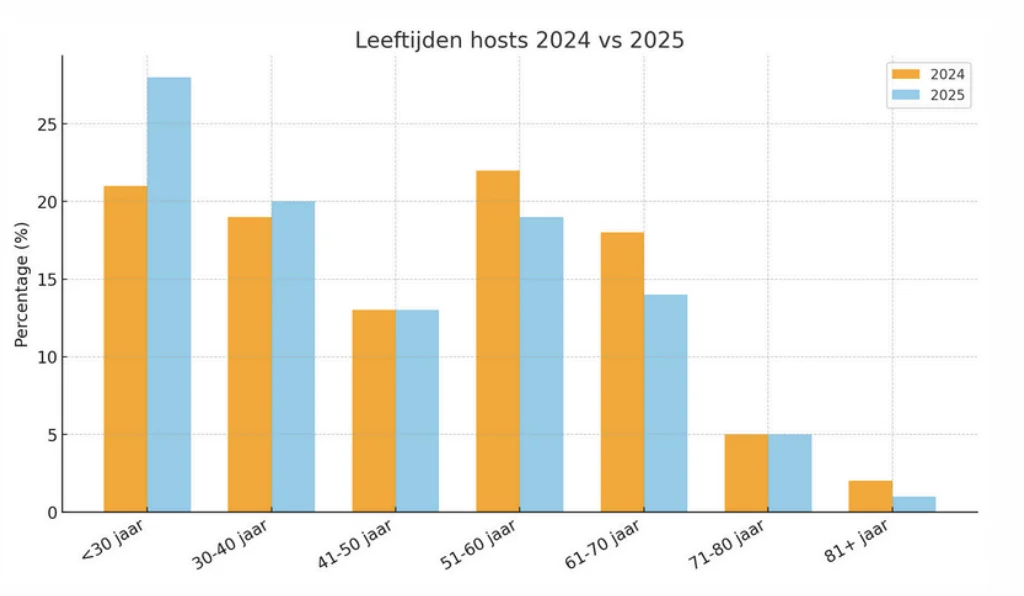
The Netherlands is currently estimated to have around 37,000 hosts, providing housing for 43,000 tenants. Another striking finding is the sharp rise in young hosts: almost half (48%) are under 40 years old. The number of municipalities allowing homestay rental without a permit is also growing (51%), though there is still considerable untapped potential in both the owner-occupied and rental sectors. A new law is expected to change this.
Key findings from the report
Homestay rooms structurally cheaper
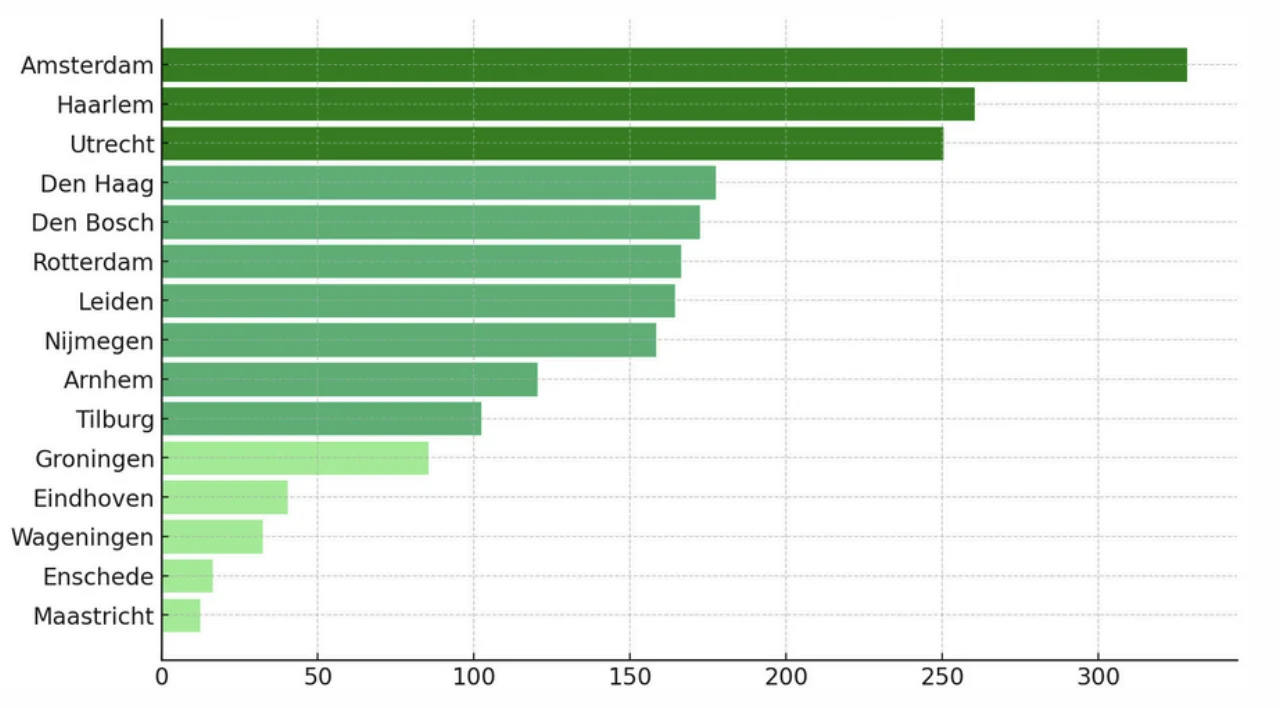
The average price of a homestay room decreased slightly compared to 2024, reaching €503 per month in 2025, versus €642 for regular rooms. The largest monthly price gaps are in Amsterdam (€328), Haarlem (€260), and Utrecht (€250). In The Hague, Den Bosch, Rotterdam, Leiden, Nijmegen, Arnhem, and Tilburg, homestay rooms are also over €100 cheaper than regular rooms.
The main explanation for these differences lies in the motivation for renting: while regular room rentals are often profit-driven, homestay rental is usually socially motivated. As a result, prices remain relatively low even in a tight housing market.
More spread beyond student cities
In 2024, 55% of hosts lived in major university cities. By 2025, this share has dropped to 49%. This shift is partly because more medium-sized and smaller municipalities now allow and encourage homestay rental without a permit.
Estimated 37,000 hosts, large growth potential
According to CBS research commissioned by the Ministry of Housing and Spatial Planning (VRO), there are around 37,000 hosts accommodating 42,000 tenants. Earlier research by the Ministry of the Interior (BZK) showed that 1 in 3 homes in the Netherlands is suitable for homestay rental. This means there is potential for an additional 150,000 housing opportunities.
Three-quarters of hosts live in 5 provinces
Most hosts live in Utrecht (18%), South Holland (18%), North Holland (15%), Gelderland (13%), and North Brabant (12%). Growth in the province of Groningen has lagged compared to previous years.
Permit-free renting growing, but regional differences remain
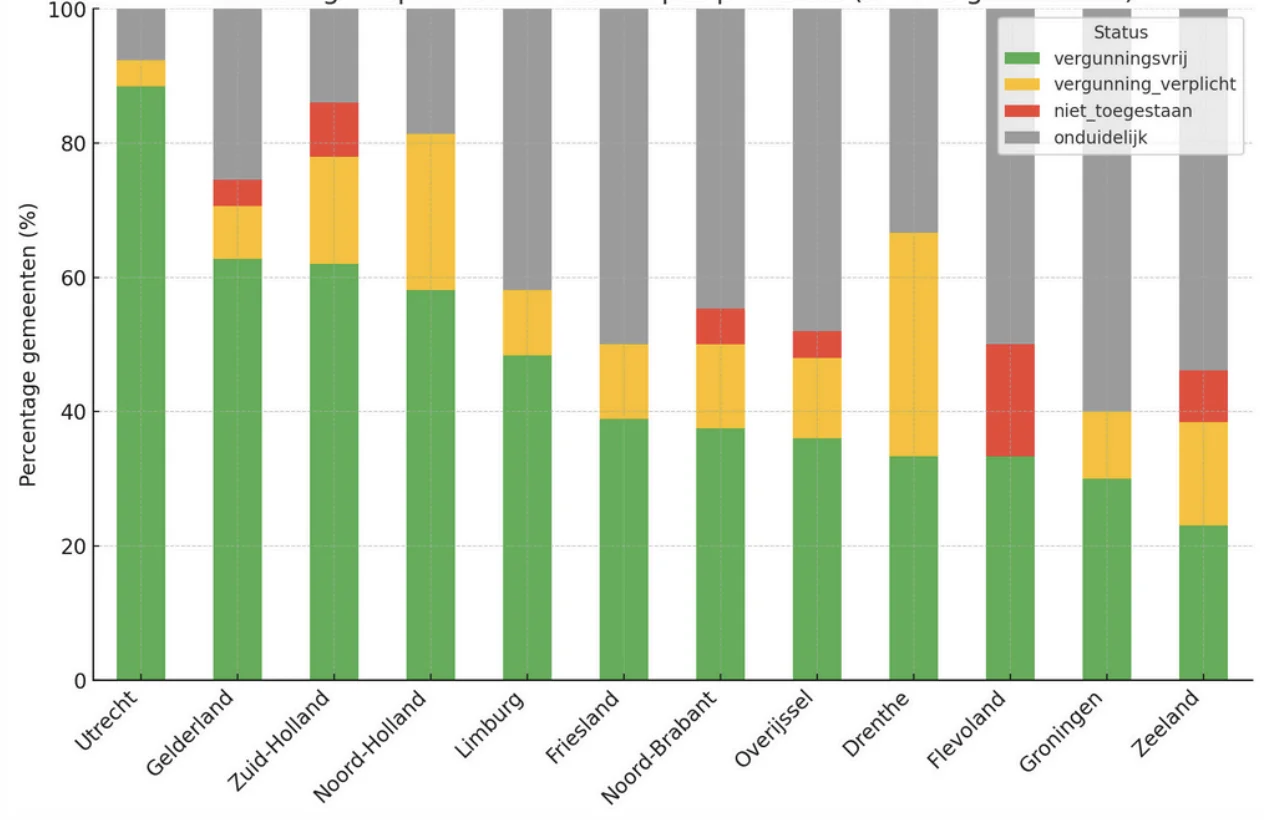
More than half of all Dutch municipalities (51%) now allow homestay rental without a permit. Municipalities in regions with one or more university cities tend to have more flexible policies. In the province of Utrecht, 89% of municipalities allow permit-free homestay rental, compared to just 30% in Groningen and 23% in Zeeland.
Regulation remains a barrier
Although the number of municipalities allowing permit-free homestay rental is steadily rising, in over 100 municipalities homestay rental is still not allowed or the policy is unclear, and in 70 municipalities a permit requirement applies. Mortgage lenders and housing corporations also often block homestay rental. An upcoming homestay rental bill, expected to take effect in late 2026, aims to change this.
Motivations of hosts and tenants
Hosts mainly start homestay rental out of social motivation (not wanting to leave space unused, wanting to help someone) and for extra income.
Tenants choose homestay rooms because of affordability, safety, and social contact. International students remain the largest group of tenants, but the number of Dutch tenants has doubled since 2022.
Outlook: homestay rental will continue to grow
According to Hospi Housing, the outlook for homestay rental is highly promising:
- Interest among potential hosts continues to increase, especially among younger generations.
- The shortage of rooms is expected to keep growing, making alternatives essential.
- More and more municipalities are allowing permit-free homestay rental.
- Housing corporations see potential to realize 40,000 additional housing opportunities through homestay rental over the next 10 years.
- The new Homestay Rental Law, scheduled to take effect in July 2026, will make it easier and more attractive to rent out rooms as a host.
Daan Donkers, founder of Hospi Housing: “The return of homestay rental is not hindered by lack of interest or political will. We are moving in the right direction, but there is still a long way to go. It requires a cultural shift, fewer rules, and more attention. That’s how we can truly bring homestay rental back and help not thousands, not tens of thousands, but—just like in the past—hundreds of thousands of people find a room in someone’s home.”
About Hospi Housing
Hospi Housing was founded in 2019 in Utrecht by three (former) students. What started with a few local pilots has since grown into the largest national platform for homestay rental in the Netherlands. As a social enterprise, Hospi Housing has actively promoted homestay rental as a social and sustainable solution to the housing shortage since its founding.
The organization works closely with the Ministry of Housing and Spatial Planning (formerly BZK), municipalities, educational institutions, and social partners. By simplifying regulations, easing policy, and improving information, Hospi Housing ensures that homestay rental becomes possible for more people. This not only helps address the shortage of rooms but also strengthens social ties and combats loneliness. That is our mission.
Note to press
The full Report on Homestay Rental in the Netherlands 2025 and images can be found via:
https://hospihousing.com/files/Hospi+Housing+rapport+hospitaverhuur+in+Nederland+2025.pdf