PRESS RELEASE: Report Homestay Rental in the Netherlands 2024
·
'In the big cities Homestay Rental is up to €300 per month cheaper than regular student housing options. Interest in Homestay Rental continues to increase.' Read the entire report here.
Utrecht, August 11, 2024
"Comeback of Homestay Rental." Over the past five years, many large municipalities have been encouraging homestay rentals, and at the national level, more and more barriers are being taken away. This has positively affected the number of (potential) hosts and guest families in the Netherlands. As of 2024, homestay rentals are no longer a drop in the ocean but a serious, sustainable, and social solution to the housing shortage.
In the article below, you will find the main findings. The full report (in Dutch) can be downloaded here.
Homestay Rental in Provinces and Cities
The Randstad, North-Brabant and Groningen are hotspots for homestay rentals. Over three-quarters of the hosts (77%) live in these five provinces, followed by Gelderland (12%) and Limburg (6%). The remaining five provinces house the remaining 5% of the hosts. Of all hosts, 55% live in 10 of the largest cities (Utrecht, Groningen, Amsterdam, Nijmegen, Leiden, Rotterdam, Maastricht, Eindhoven, Tilburg, and The Hague). The majority of the other hosts live in municipalities around the large cities, such as Haarlem, Amersfoort, and Best, or in medium-sized cities like Wageningen, Venlo, and Arnhem.
Some differences between large (G13) and smaller municipalities can be explained by regulations and communication. All G13 municipalities allow homestay rentals (under certain conditions) and have the policy on their website. The majority have actively promoted homestay rentals through campaigns. Many smaller municipalities do not have a separate policy for homestay rentals. It is also often unclear what is allowed and what is not. Rules about homestay rentals can be found online in less than 10% of the 342 municipalities in the Netherlands.
Room Prices
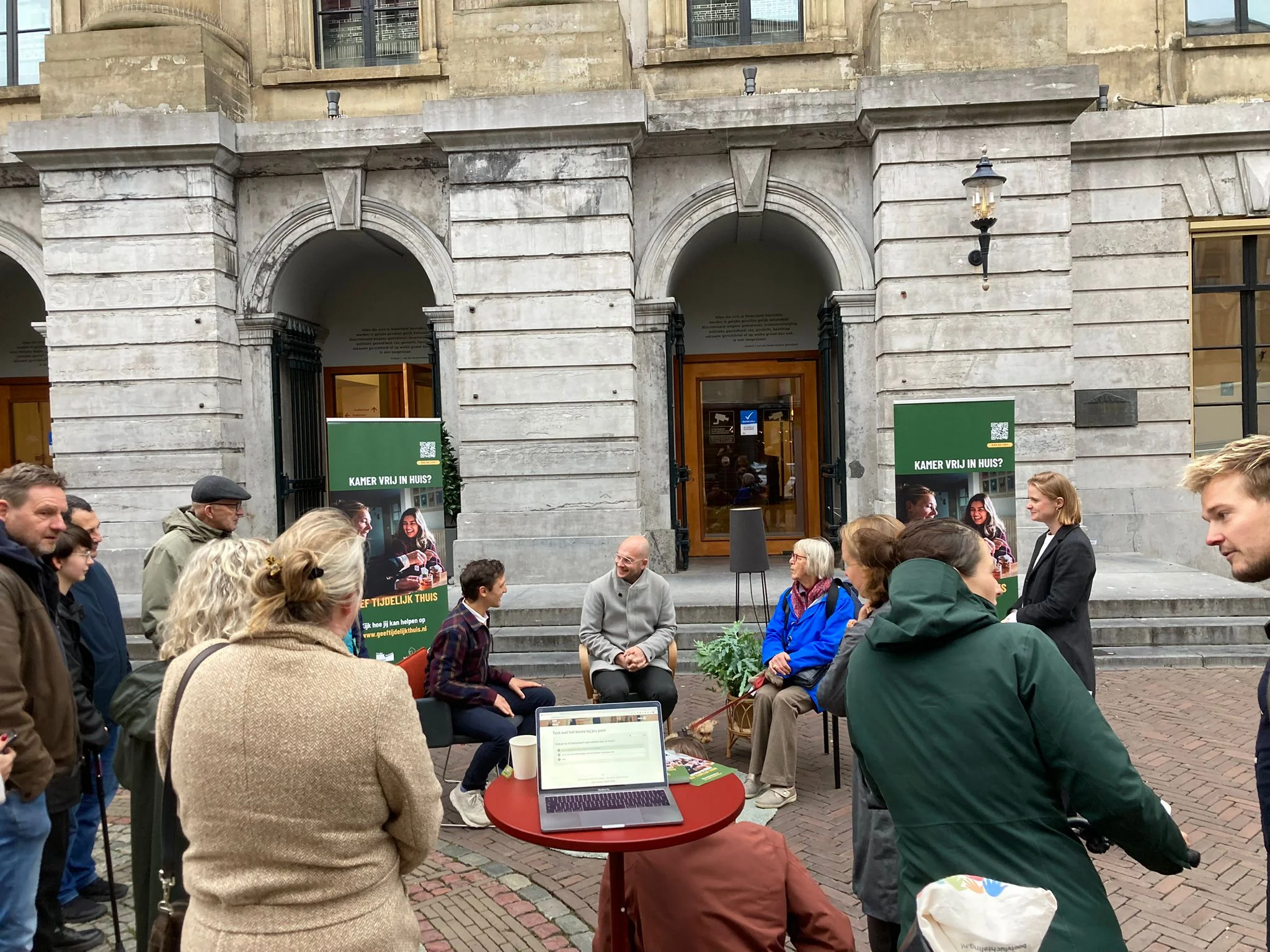
The prices for homestay rooms are cheaper than regular rooms in almost every major (student) city. In the big cities, the differences are the largest: Amsterdam €513 vs €948, Utrecht €449 vs €708, and Rotterdam €461 vs €672. The main reason for these price differences is the motivation for renting. Regular landlords are often driven by profit, while social motives play a larger role in homestay rentals, keeping prices relatively low even in a tight market.
Compared to 2023, the average price of homestay rooms in the first half of 2024 has slightly increased but remains below €500 per month. This is significantly lower than the price increase of up to 30% for regular rooms. Living with a host or guest family remains by far the cheapest option for students and other room seekers in 2024.
Homestay Rental in the Netherlands
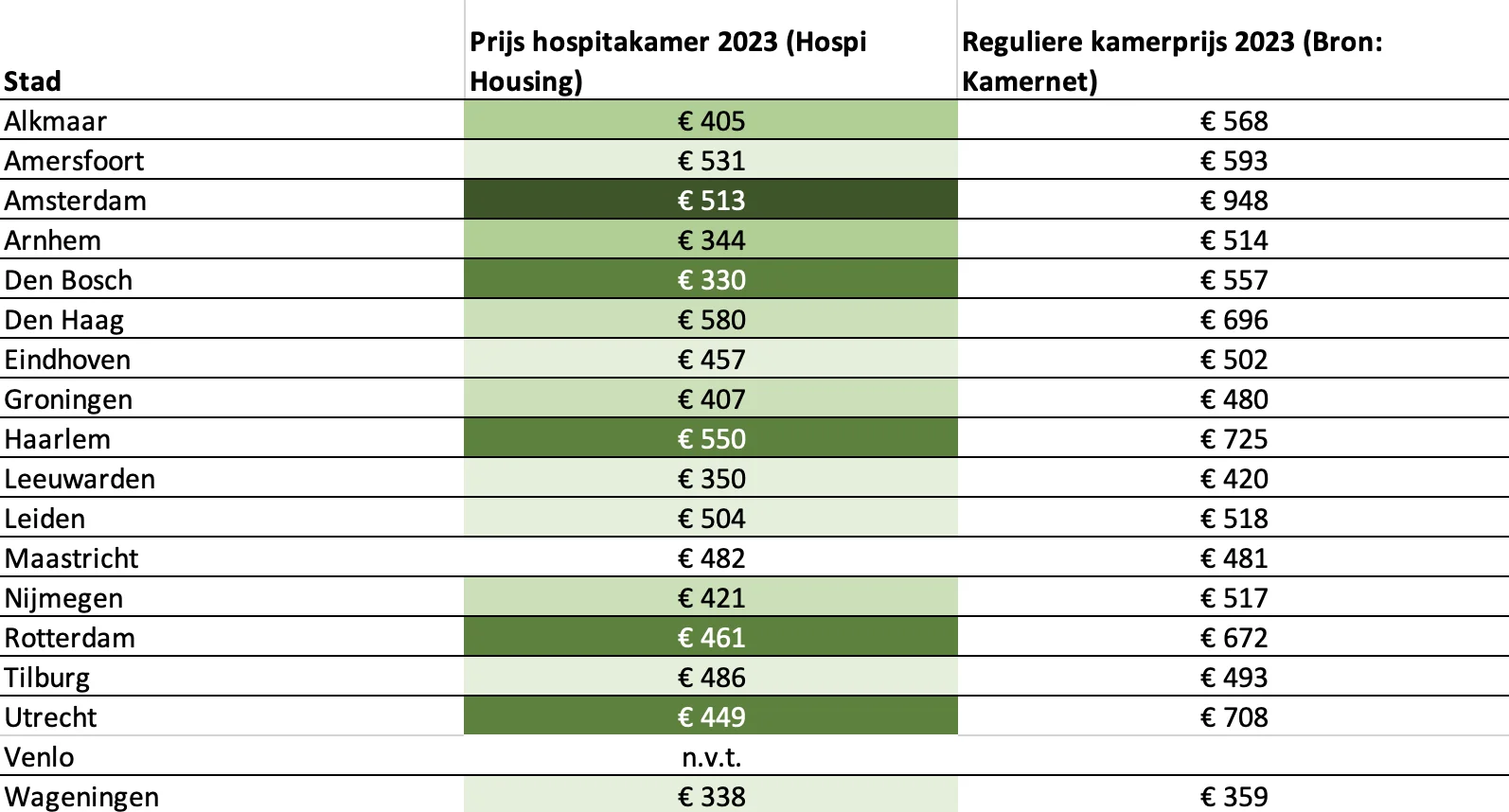
Interest in homestay rental is rapidly increasing and potential is huge. As many as 944,000 Dutch people live alone in a house larger than 90m² with 3 or more rooms. A total of 8% of the Dutch population is considering homestay rentals, of which 2% definitely wants to do it, according to research commissioned by the Ministry of the Interior. Interest is even greater among Dutch homeowners, with 1 in 5 according to BZK (February 2024) and 2 in 5 according to Univé (July 2024).
More and more people consider homestay rental a good idea to combat the housing shortage. The willingness to rent out a room or floor in their own house is also increasing significantly, according to the ING Housing Report from March 2024. “Even if 2% of homeowners rent out a room, this equals almost 80,000 extra living spaces, comparable to a year of construction production,” says Wim Flikweert, Manager of Housing at ING Netherlands.
Motivations for Renting and Letting
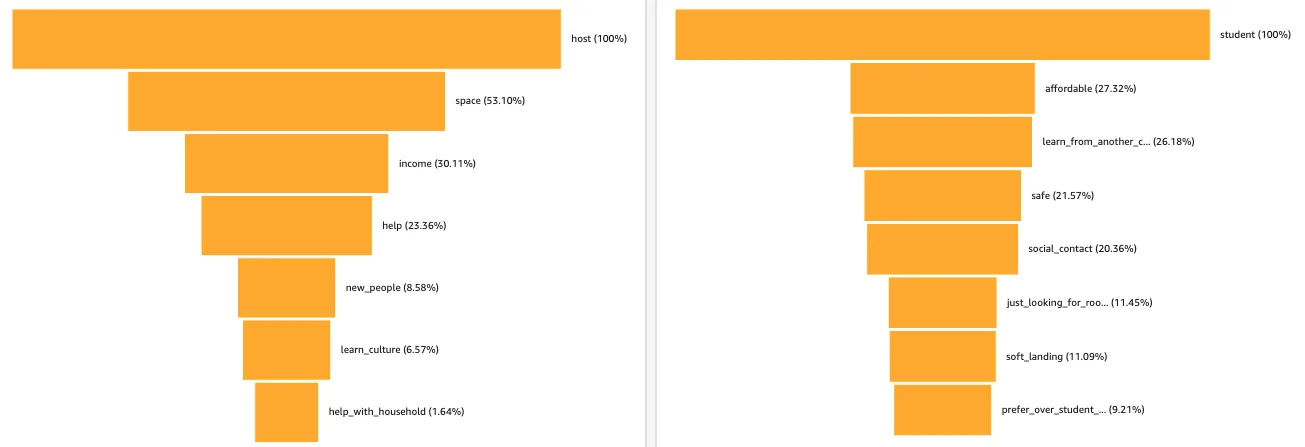
Various studies show a similar picture: financial motives often play a role for hosts and guest families, but almost always in combination with social and societal motives. This explains the relatively low prices of homestay rooms compared to regular rooms. For room seekers, affordability and safety are the main reasons for choosing homestay rentals.
Demographic Characteristics of Hosts and Tenants
The traditional image of the landlady: an older single woman, is no longer correct. A more diverse group is interested and willing to rent out a room at home. The number of male hosts, as well as the number of couples (both old and young) and guest families, is steadily increasing. Eased regulations, so homestay rentals is more often allowed without a permit, helps with this.
Students make up the largest group of room seekers at 76%. The need for temporary housing is high, for example for study or internships, or as a bridge to permanent housing. Living with a host or guest family can provide a solution in these situations. Additionally, homestay rentals offer a safe and quiet place and can prevent loneliness. Over three-quarters of room seekers express a need for social contact with their host or guest family.
Characteristics of Homestay Rooms
The largest group of interested landladies are people with an owner-occupied home and a mortgage (65%). Unfortunately, the majority do not receive permission from the bank and therefore refrain from landlady rentals. A legislative change should bring about a change here, but until then, many potential landladies are waiting to offer living space, and these rooms remain empty.

Forecast for 2025 & 2026
Interest in homestay rentals has tripled each year over the past five years. Hospi Housing expects this growth to continue in 2025 and 2026. The reasons we expect an increase are:
- Homestay rentals are not only a solution to the room shortage but also bring many benefits to the host.
- There is broad consensus that, in addition to building new homes, existing housing must be better used to solve the housing shortage.
- A national campaign on homestay rentals targeting municipalities and housing associations will start in September 2024.
- More and more municipalities and housing associations are allowing homestay rentals without a permit.
- A legislative change is on the way to remove objections from mortgage lenders, increasing the potential pool of hosts.
The comeback of homestay rental looks promising but is not achieved overnight. It requires a cultural shift, fewer regulations, and more political attention. This way, we can truly bring back homestay rental and help not thousands, not tens of thousands, but - just like in the past - hundreds of thousands of people find a room in someone’s home.
Contact
For media inquiries, contact: Daan Donkers, founder - 06 81872586
For collaborations, contact: Joost Bokkers, founder - 06 13388424
The full report can be downloaded here.