Housing Shortage in the Netherlands After WWII: Living in Trams and Bunkers
Eighty years ago, Dutch families lived in tram wagons, bunkers and converted buildings due to a severe postwar housing shortage. A glimpse into how people coped with one of the country’s greatest domestic challenges.
Today’s housing crisis may feel unprecedented, but the Netherlands faced a similarly severe shortage in the years after World War II. Families lived in tram wagons, bunkers and improvised shelters. A brief look back at a forgotten housing crisis - and what it can teach us.
"Public enemy number 1"
When we talk about the housing crisis today, it can feel unprecedented. But 80 years ago, the Netherlands faced a housing shortage that was at least as severe.
Shortly after World War II, around 120,000 homes had been damaged or destroyed, nearly 90,000 beyond repair. Infrastructure was shattered, building materials were scarce, and construction had largely come to a halt during the occupation.
In 1949, the Minister of Reconstruction famously called the housing shortage “public enemy number one.”
Living Wherever Possible
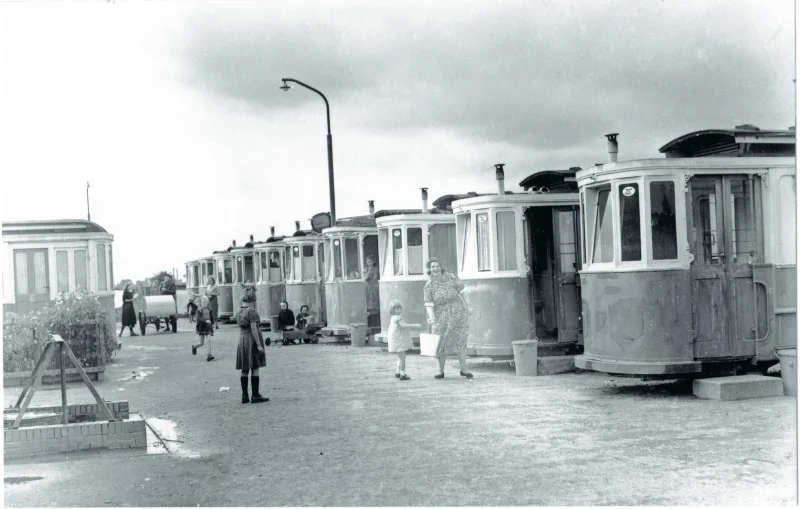
The shortage led to extreme improvisation. Families lived in abandoned bunkers. Others moved into old carriages or converted buildings never meant for residential use. In the city of Groningen, nineteen decommissioned tram wagons were turned into temporary homes between 1950 and 1954 - an area later nicknamed “Tramdorp.”
Municipalities encouraged splitting houses so multiple families could share one address. Young couples moved back in with parents. Some even built makeshift homes from basic materials like asbestos sheets and cardboard panels.
Growing Demand, Slow Recovery
In 1945, the housing shortage was already estimated at 200,000 homes - and the population was growing rapidly. Young families were starting their lives, but there simply weren’t enough houses available.
It took until the early 1960s before construction finally reached levels high enough to ease the pressure.
A Forgotten Chapter
The postwar housing crisis reminds us that housing shortages are not new. They are deeply connected to economic conditions, demographic change and political priorities.
Looking back at this period shows both the severity of the crisis - and the resilience of people who found ways to create a home under extraordinary circumstances. Read the entire article on Historiek.net.