House of Representatives Elections 2025: Dutch parties on Housing
·
For many Dutch voters, housing is thé main topic of the elections. But what solutions do the different parties offer?
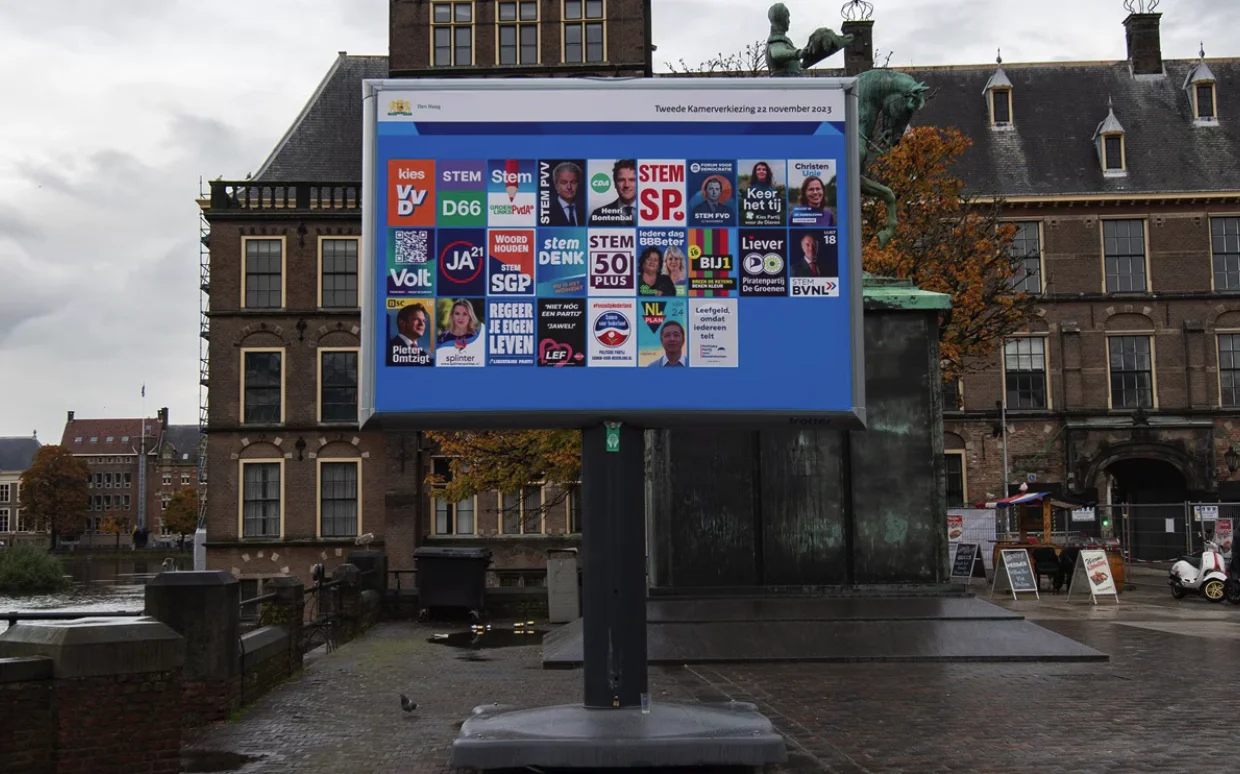
On Wednesday 29 October 2025, the Netherlands heads to the polls for the national parliamentary elections. For millions of voters, housing is the key issue - and rightly so. The housing shortage remains severe, with an estimated 400,000 homes lacking nationwide. For students, starters and families, finding an affordable place to live has become increasingly difficult.
At Hospi Housing, we see the effects of this shortage every day. We actively monitor housing policy developments and provide input to governments and political parties, particularly on innovative housing models, room rentals, and improving mobility in the housing market. As we look ahead to the municipal elections in March 2026, we’ll continue to do so. But first: what choices will voters face this election on the issue of housing?
Government or market: who should take the lead?
All parties agree that more homes need to be built - but they differ fundamentally on who should take the lead.
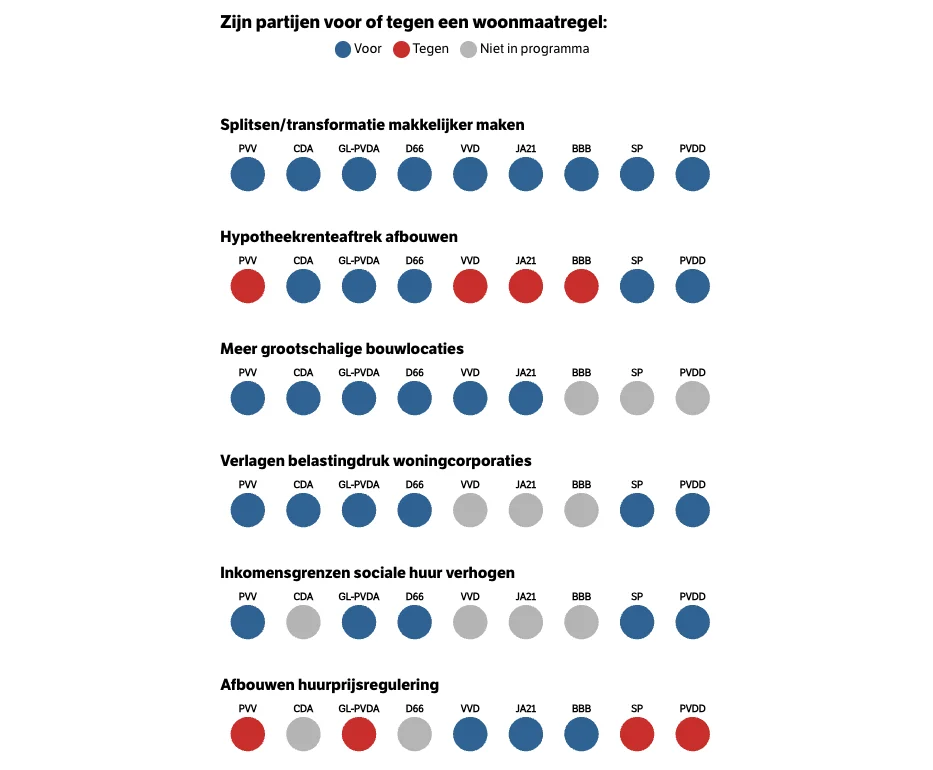
- VVD, BBB and JA21 argue that the government has overregulated the housing market. They want fewer restrictions and more room for private investors to build and rent homes. These parties propose abolishing rent controls introduced by former housing minister Hugo de Jonge (CDA), lowering taxes for property investors, and easing affordability requirements for new housing developments. Their logic: fewer rules mean faster construction.
- GroenLinks–PvdA, D66 and CDA, by contrast, believe that excessive market liberalisation has caused today’s housing crisis. They call for a stronger role for the government and housing associations, which should also be allowed to build mid-range rental and affordable owner-occupied homes.
- Especially SP and GroenLinks–PvdA want to restore the central role housing associations once had - supported by tax relief and a broader construction mandate.
In short, the choice between market or government involvement will determine the direction of Dutch housing policy in the years ahead.
Rent or buy: where should the focus be?
The housing crisis affects both tenants and buyers, but parties differ in which group they want to prioritise.
- GroenLinks–PvdA, D66 and PVV advocate expanding the social rental sector, so that up to two-thirds of Dutch households would qualify for a social home - by raising income thresholds and giving housing associations greater financial capacity to build.
- VVD, BBB and JA21, on the other hand, emphasise home ownership. The VVD calls the mortgage interest deduction non-negotiable and proposes special starter mortgages and even a ‘right to buy’ for tenants of social housing. Their belief: owning a home helps build wealth and stability.
- CDA and SP opt for a middle ground - strengthening both rental and ownership options to create a more balanced housing market.
For voters, this reflects a deeper question: should housing primarily be a social right, or an individual asset?
Where to build: inside or outside the city?
Another key question is where new homes should be built. Almost every party agrees that construction must accelerate, but they differ on location and conditions.
- Whereas large-scale development outside cities used to be a right-wing idea, it now attracts broader political support. Even D66 and GroenLinks–PvdA back the creation of major suburban extensions or entirely new towns.
- BBB opposes building on agricultural land, and the Party for the Animals (PvdD) rejects development in natural areas.
- PVV, JA21 and BBB want softer nitrogen rules to speed up building, while GroenLinks–PvdA, D66 and CDA prefer stricter standards and propose a public land bank to prevent speculation and keep building plots affordable.
Where all parties agree is that bureaucracy must be reduced. Shorter procedures and fewer objections could significantly speed up the construction process.
Common ground: everyone wants to build faster
Despite ideological differences, there are several shared ambitions:
- Most parties support the national target of 100,000 new homes per year, and many would allocate additional funding to achieve it.
- Better use of the existing housing stock - through splitting, adding floors (“optoppen”), and shared living - is widely endorsed (which we at Hospi Housing ofcourse endorse).
- Simplifying building regulations and cutting red tape has broad political support.
In essence: the will to build is there, but the path forward differs.
What this means for you as a host
At Hospi Housing, we know that every home matters - whether large or small, temporary or permanent. Solutions such as room sharing, conversions and homestay rental can quickly create new living space, especially for students and young professionals.
It is therefore vital that future policy allows room for innovative housing concepts, while maintaining affordability and liveability. Whether the next government opts for market-driven growth, stronger public control, or a mix of both - only collaboration, clear direction and pragmatism can truly solve the housing crisis.
Vote for housing
The choices made during these elections will decide how the Netherlands tackles its housing shortage - with more market or more public leadership, more renting or more ownership, inner-city growth or expansion beyond the city limits. At Hospi Housing, we will continue to monitor developments closely and contribute to solutions that genuinely work.
So, go vote - and vote with housing in mind. Because your choice will help shape how, and where, we live in the Netherlands.